Antonín Dvořák
Antonín Dvořák was a celebrated Czech Romantic composer whose richly melodic music blends European classical traditions with the distinctive rhythms, colours and spirit of his Bohemian homeland.
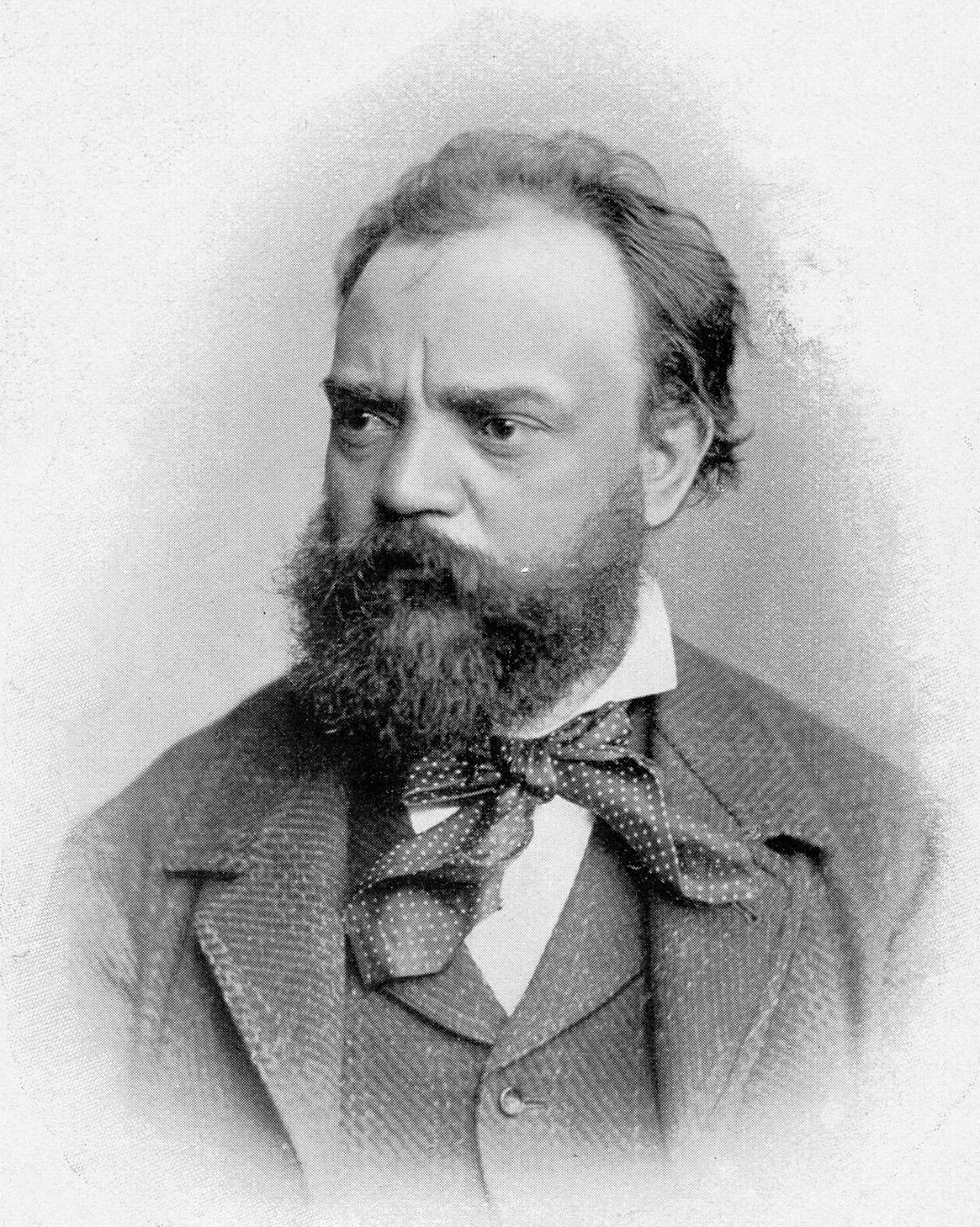
Antonín Dvořák was one of the most important Czech composers of the nineteenth century and one of the leading figures of the late Romantic era. Born into a modest family in the Bohemian village of Nelahozeves, near Prague, he showed musical talent from an early age. He studied at the Prague Organ School and initially supported himself as a violist, including as a member of the orchestra of the Provisional Theatre in Prague, where he encountered the music of composers such as Smetana and Wagner.
Dvořák gradually established himself as a composer, developing a distinctive musical voice that combined the traditions of European classical music with the melodies, rhythms and dances of his Czech homeland. His Slavonic Dances brought him international recognition in the 1870s, and his reputation continued to grow through works including symphonies, concertos, chamber music, choral works and operas. Although strongly influenced by Czech folk music, Dvořák rarely quoted folk melodies directly; instead, he incorporated their characteristic rhythms, harmonic colours and expressive qualities into his own musical language.
Dvořák's international reputation led to invitations to conduct and perform his music across Europe. In 1892 he travelled to the United States to become director of the National Conservatory of Music in New York. During his three years there, he became fascinated by American musical traditions and landscapes. His experiences contributed to some of his most celebrated works, including the Symphony No. 9 “From the New World” and the String Quartet No. 12 “American”. He subsequently returned to Prague, where he continued to compose and teach, eventually becoming director of the Prague Conservatory.
Dvořák's music is characterised by memorable melodies, rhythmic vitality, warm orchestral colours and a remarkable ability to balance intimate lyricism with powerful drama. His Symphony No. 8, Cello Concerto, Violin Concerto, Stabat Mater, Slavonic Dances and operas—including Rusalka—remain central to the international classical repertoire. He died in Prague in 1904, leaving a body of work that has secured his place as one of the most enduringly popular and influential Czech composers.