George Frideric Handel
George Frideric Handel was a German-born Baroque composer who made his career in England, renowned for his operas, oratorios and instrumental music, including the enduring masterpiece Messiah.
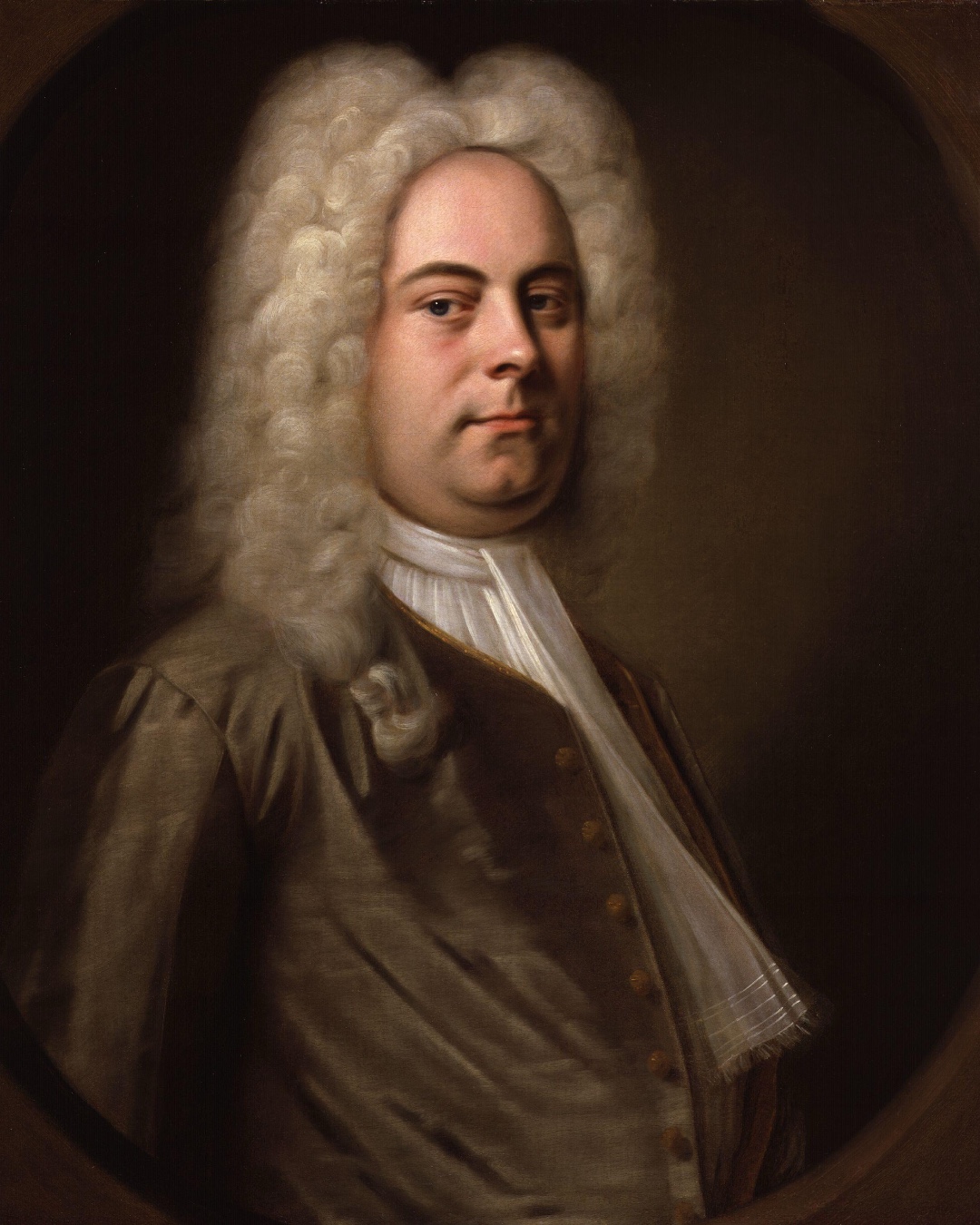
George Frideric Handel was one of the great composers of the Baroque era and one of the most influential musicians to make his career in Britain. Born in Halle, Germany, Handel showed remarkable musical talent from an early age. He initially trained in Germany before travelling to Hamburg and then to Italy, where he absorbed the Italian operatic style and encountered the music of composers including Corelli and Scarlatti.
In 1710 Handel moved to London, which became his permanent home. He quickly established himself as a leading composer of Italian opera, writing works characterised by dramatic storytelling, virtuosic vocal writing and richly expressive orchestral music. His operas, including Rinaldo, Giulio Cesare and Alcina, made him one of London's most celebrated musicians.
As public enthusiasm for Italian opera declined, Handel increasingly turned to English-language oratorio. This led to the works for which he is best known today, including Saul, Israel in Egypt and Samson. His greatest triumph was Messiah, first performed in Dublin in 1742. Its powerful choruses, expressive solo writing and grand-scale treatment of biblical texts established it as one of the most enduring works in the choral repertoire.
Handel was also an outstanding composer of instrumental music. His Water Music was written for a royal river pageant on the Thames, while Music for the Royal Fireworks was composed for a spectacular celebration in London's Green Park. His twelve Concerti Grossi, Op. 6, demonstrate his mastery of Baroque ensemble writing, combining energetic counterpoint, expressive slow movements and lively exchanges between soloists and orchestra.
Handel became a British subject in 1727 and spent the rest of his life in London. Despite suffering declining eyesight in his later years, he continued to compose and perform until shortly before his death in 1759. His music combines technical brilliance with direct emotional appeal, and his influence can still be heard in the orchestral, operatic and choral traditions that followed him. Today, Handel's music remains central to the Baroque repertoire and continues to be performed by orchestras, choirs and opera companies around the world.