Meet the Ophicleide: Bringing Mendelssohn's Forgotten Brass Instrument Back to Life
Wednesday, November 11th, 2026
When Sheffield Chamber Orchestra performs Mendelssohn's A Midsummer Night's Dream Overture on 5 December, audiences will have a rare opportunity to hear a remarkable instrument from the nineteenth century. We meet young brass musician Ini Kuti, who will be bringing the extraordinary sound of the ophicleide to the concert.
Imagine a brass instrument that looks a little like a bassoon, has a mouthpiece resembling that of a trombone, and produces a sound quite unlike the modern tuba. Add an array of keys, a fascinating history stretching back more than two centuries, and a reputation for being notoriously difficult to play, and you have the ophicleide.
Once an important voice in the orchestras of Berlioz, Mendelssohn and other great Romantic composers, the ophicleide has largely disappeared from the modern concert platform. Its parts are now usually performed on the tuba, an instrument that eventually superseded it.
But for Sheffield Chamber Orchestra's December concert, we're turning back the clock.
Joining us for Mendelssohn's magical A Midsummer Night's Dream Overture will be Ini Kuti, a talented young tuba player and historical brass enthusiast currently studying at the Royal Birmingham Conservatoire. Ini will perform on the ophicleide, offering audiences a chance to experience a distinctive sound from Mendelssohn's musical world.
We spoke to Ini about this extraordinary instrument, its place in musical history and the challenges and rewards of bringing it back to life.
What exactly is an ophicleide?
"The ophicleide is a keyed brass instrument invented in France around 1817," Ini explains. "It's a predecessor of the modern tuba and was first used in military bands before finding its way into orchestras, becoming one of the principal bass instruments in the brass section throughout nineteenth-century Western Europe."
Unlike the familiar valves of a modern tuba, the ophicleide uses a system of keys to open and close holes along its body, changing the pitch of the notes.
"One of the most notable things about it is its many keys! Before valves became popular for changing notes on brass instruments, some instruments used keys instead. The ophicleide typically has between nine and eleven."
Its appearance is striking, but its sound is perhaps even more surprising.
"The body looks quite similar to that of a bassoon, and the sound can be quite dry and nasal," Ini tells us.
That distinctive character was particularly attractive to nineteenth-century composers. Hector Berlioz, one of the great pioneers of orchestral colour, famously employed ophicleides in his Symphonie fantastique, including the dramatic Dies irae passage in its final movement.
For modern audiences accustomed to the broad, rounded resonance of the tuba, the ophicleide offers something rather different: a lighter, more penetrating voice with a character all its own.
From the serpent to the tuba: a remarkable family history
The ophicleide occupies a fascinating place in the evolution of brass instruments.
"Before the ophicleide, there was another instrument known as the serpent," Ini explains. "It was a type of bass horn made out of wood in an S-shape, with finger holes like a recorder, and was wrapped in leather."
Traditionally associated with French church music from around the sixteenth century, the serpent was used to support lower voices in choirs. Its unusual winding shape gave it its name.
The ophicleide's name reflects this ancestry.
"It comes from the Greek words ophis, meaning serpent, and kleis, meaning closure, referring to the keys. So essentially, ophicleide means 'serpent with keys'."
The new instrument offered a more practical and powerful bass voice, eventually finding favour in military bands and orchestras.
Throughout the nineteenth century, composers including Berlioz, Mendelssohn, Verdi and Wagner explored its possibilities. But advances in brass instrument design would ultimately bring its dominance to an end.
"By the late nineteenth century, with the invention of reliable valve systems, instruments like the early bass tubas superseded the ophicleide," Ini explains. "They could reach lower notes with greater stability, power and a more uniform tone quality."
The tuba became the standard orchestral bass brass instrument, and the ophicleide gradually faded from everyday musical life.
Today, hearing one in concert is a rare experience, particularly outside specialist historical performances.
Why did Mendelssohn write for the ophicleide?
Mendelssohn's A Midsummer Night's Dream music offers a particularly interesting glimpse into the changing world of nineteenth-century brass instruments.
The composer wrote his celebrated concert overture in 1826, when he was just seventeen. Years later, in 1842, he returned to Shakespeare's play to compose a much larger collection of incidental music, including the famous Wedding March.
The intervening years were a period of considerable change in orchestral instrumentation, and the ophicleide was becoming an established member of the brass section.
For Ini, one of the most interesting aspects of Mendelssohn's writing is the independence he gives the instrument.
"Mendelssohn is one of the composers who doesn't simply write for the ophicleide as a fourth trombone," he explains. "Instead, he gives it a unique function in all kinds of ways, whether that's reinforcing and doubling bass lines with the low strings, or even playing higher, intertwining contrapuntal passages with the woodwinds."
This makes the ophicleide much more than a source of weight at the bottom of the orchestra.
Its relatively light, tenor-like sound allows it to blend with different instrumental families, contributing colour and definition without necessarily overwhelming the musical texture.
For listeners, this provides a fascinating opportunity to hear Mendelssohn's orchestration from a different perspective.
And for Ini, it brings a special challenge.
"These passages can make the part as a whole very exposed," he says.
A very different playing experience
Although Ini is an accomplished tuba player, learning the ophicleide has required him to rethink some fundamental aspects of his technique.
"Very different!" is his immediate response when asked how the two instruments compare.
"When learning the ophicleide, it was important to treat it physically as a separate instrument from the tuba, particularly in terms of embouchure, articulation and tone production."
The mouthpiece is one of the most immediate differences.
"It's much smaller than a tuba mouthpiece, more similar to that of a trombone. This changes the way I position my lips to play and affects how I pitch and articulate the notes."
Then there is the fingering system.
"Learning the unique key fingerings took a while!"
Perhaps the greatest challenge, however, is playing in tune.
"With modern instruments, we have the luxury of them generally being able to play in tune with themselves. The ophicleide is quite a challenge because, with its many tone holes, intonation can be difficult to control and can easily be miles off."
Yet these difficulties are part of what makes the instrument so rewarding.
"I enjoy the challenge of the delicate control that historical instruments such as the ophicleide require, and their different tones. It's given me insight into musical interpretation and different approaches when I'm back playing their modern successors."
For Ini, exploring historical instruments isn't simply about recreating the past. It's also about becoming a more thoughtful and versatile musician.
A childhood fascination becomes a musical passion
Ini's interest in historical brass began with an unexpected discovery.
"Early on as a kid, I didn't really know much about the tuba's history," he recalls. "It wasn't until I randomly came across a video online of a period orchestra performing Berlioz's Symphonie fantastique, with a serpent and ophicleide."
The unfamiliar instruments immediately caught his attention.
"This captivated me at a young age and sent me down all sorts of rabbit holes, learning more about historical low brass. To my surprise, they were all related to the tuba in some way."
What began as curiosity gradually developed into a serious musical ambition.
"Later in my development, I became very invested in the idea of specialising in historical low brass, as there aren't that many people doing it."
Ini has been fortunate to study the ophicleide with Andrew Kershaw, a specialist historical brass performer whose work includes performances with leading period-instrument ensembles such as the Orchestra of the Age of Enlightenment and the Gabrieli Consort.
That specialist training has helped Ini develop his understanding of both the instrument's technique and the musical traditions in which it originally flourished.
Meet Ini Kuti: a rising star of the brass world
Originally from Stockport, Greater Manchester, Ini is now in his third year at the Royal Birmingham Conservatoire, where he is studying for a degree in performance as the recipient of a full Leverhulme Trust Scholarship.
His principal tuba teachers include Leslie Neish and Daniel Trodden of the City of Birmingham Symphony Orchestra, alongside his specialist ophicleide studies with Andrew Kershaw.
Ini's musical journey began on the violin before he discovered the tuba at secondary school. He subsequently studied at the Junior Royal Northern College of Music, where he received the Martin Winter Prize for Brass and the Sylvia Swiffin Trust Prize.
His orchestral experience is already impressive.
He has served as Principal Tuba with the Hallé Youth Orchestra and performed with the National Youth Orchestra of Great Britain, including an appearance at the BBC Proms at the Royal Albert Hall in 2024.
More recently, he made his professional orchestral debut as guest Principal Tuba with Birmingham Royal Ballet and has participated in orchestral training schemes with the Royal Ballet Sinfonia and the City of Birmingham Symphony Orchestra.
Alongside his orchestral work, Ini has continued to pursue his passion for historical low brass, participating in events including the Edinburgh Serpentarium and projects associated with the British Trombone Society.
His ambition is to develop a career that combines modern orchestral performance with specialist historical brass playing.
Bringing Mendelssohn's sound to Sheffield
For Ini, the Sheffield Chamber Orchestra concert will mark another exciting milestone.
"This will be my first time playing Mendelssohn's A Midsummer Night's Dream Overture, and I'm very much looking forward to the challenge of doing it on the ophicleide."
The instrument's exposed passages, unusual tone and demanding technique promise to make the performance particularly rewarding.
And Ini has a special invitation for brass players and curious concertgoers alike.
"Seeing the ophicleide being used outside period performances is quite rare nowadays, as the tuba covers most of its parts in modern practice. So, for a first-time listener, this is a great chance to hear it in the music for which it was intended — and potentially see it up close after the concert!"
For those who love orchestral music, musical history or simply discovering something unexpected, this is an opportunity not to be missed.
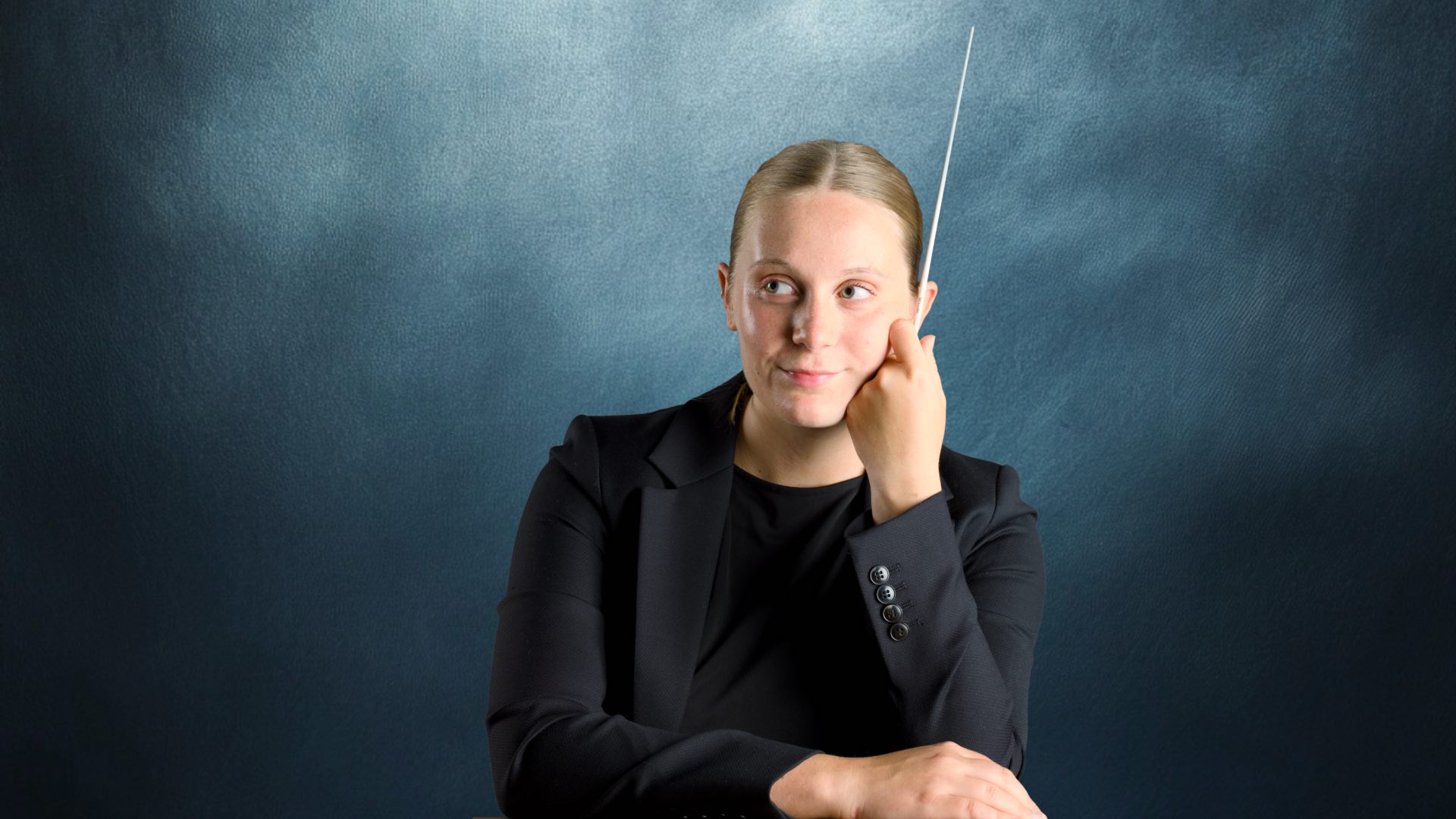
On Saturday 5 December 2026, join Sheffield Chamber Orchestra, conducted by Gina Hazell, for an evening of musical discovery featuring Mendelssohn's A Midsummer Night's Dream Overture, alongside Handel's Concerto Grosso in B-flat major, Op. 6 No. 7, Dvořák's Czech Suite and Louise Farrenc's Symphony No. 1.
Come and discover the magical sound of Mendelssohn's orchestra — with an instrument you may never have heard before.
Book your tickets now and experience the ophicleide live with Sheffield Chamber Orchestra.
Wednesday, November 11th, 2026


Similar stories
Here are some recent related articles.